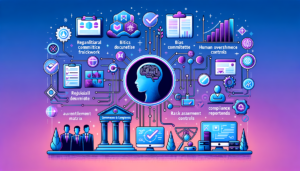
The regulatory landscape for artificial intelligence transformed dramatically between 2024 and 2026, shifting from voluntary guidelines to mandatory compliance frameworks with substantial penalties for violations. The EU AI Act took full effect in August 2025, California’s AI Transparency Act became law in January 2026, and federal regulations in the United States, Canada, and Asia-Pacific nations introduced stringent requirements for AI system documentation, testing, and oversight. Organizations that treated AI governance as optional now face enforcement actions, with early fines reaching €15 million for EU AI Act violations and $2.5 million for California transparency failures. A financial services firm recently paid $8.7 million in combined penalties for deploying credit scoring AI without required fairness testing and documentation.
Yet compliance represents just the baseline. Leading organizations recognize that robust AI governance delivers strategic advantages beyond regulatory adherence: reduced legal liability, improved model reliability, stronger customer trust, and better risk management. A healthcare AI provider implementing comprehensive governance frameworks reported 40% fewer model failures in production, 67% faster incident resolution through better documentation, and 3x faster regulatory approval for new AI features. This guide provides a comprehensive framework for enterprise AI governance in 2026, covering regulatory requirements across jurisdictions, practical implementation strategies, and production-tested governance architectures that balance compliance rigor with development velocity.
Understanding the Global AI Regulatory Landscape
AI regulation in 2026 presents a complex patchwork of overlapping requirements across jurisdictions. Organizations operating globally must navigate EU, US federal and state, Canadian, UK, Chinese, and industry-specific regulations simultaneously. The challenge intensifies for AI systems serving users across multiple jurisdictions, where compliance requires meeting the most stringent applicable standard from each relevant regulatory framework.
The EU AI Act: Risk-Based Classification and Requirements
The EU AI Act, fully enforceable since August 2025, classifies AI systems into four risk categories with escalating requirements. Unacceptable risk systems are banned outright: social scoring by governments, real-time biometric identification in public spaces (with narrow law enforcement exceptions), and subliminal manipulation. High-risk systems—those affecting safety or fundamental rights—face extensive requirements including conformity assessments, technical documentation, risk management systems, data governance, human oversight, and accuracy/robustness testing. High-risk categories include: critical infrastructure, education and employment, essential services (credit scoring, insurance), law enforcement, migration/border control, and administration of justice.
Limited risk systems (chatbots, emotion recognition, deepfakes) require transparency obligations: users must be informed they’re interacting with AI. Minimal risk systems (spam filters, recommendation engines) face no specific requirements but remain subject to general consumer protection and data privacy laws. The risk classification determines compliance burden: minimal risk might involve 40-60 hours of initial compliance work, while high-risk systems require 800-2000 hours for conformity assessment, documentation, and ongoing monitoring infrastructure.
United States: Federal Framework and State Regulations
The US federal AI governance framework, established by the Algorithmic Accountability Act of 2025, requires impact assessments for automated decision systems affecting critical decisions (employment, credit, housing, education, healthcare). Companies must evaluate systems for discrimination, fairness, accuracy, and privacy impacts before deployment and annually thereafter. The Federal Trade Commission enforces these requirements, with penalties up to $43,000 per violation per day for willful violations.
State regulations add complexity. California’s AI Transparency Act mandates disclosure of AI use in consumer-facing applications, documentation of training data sources, and fairness testing for systems affecting protected classes. New York’s AI Hiring Law requires bias audits for automated employment decision tools, with results published publicly. Illinois’ Biometric Information Privacy Act affects AI systems processing facial recognition or other biometric data. Organizations operating nationally must comply with requirements from all states where they have users, creating a de facto national standard at the highest state-level requirement.
Industry-Specific Regulations: Healthcare, Finance, and Beyond
Industry-specific regulations layer additional requirements onto horizontal AI frameworks. Healthcare AI must comply with HIPAA privacy rules, FDA medical device regulations (for diagnostic AI), and CMS coverage/reimbursement requirements. Financial services AI faces oversight from CFPB (consumer protection), OCC (banking), SEC (securities), and FINRA (broker-dealers), each with specific fairness, explainability, and documentation requirements. Insurance AI encounters state insurance commissioner oversight requiring actuarial justification for AI-driven underwriting and pricing decisions.
These industry regulations typically predate general AI frameworks and remain in force, creating cumulative compliance obligations. A healthcare AI system for clinical decision support must satisfy: FDA premarket clearance (if considered medical device), HIPAA compliance (patient privacy), EU AI Act conformity (if serving EU patients), state medical board requirements (scope of practice), and hospital accreditation standards (Joint Commission). This multi-layered compliance landscape demands sophisticated governance programs capable of tracking and satisfying requirements from a dozen or more regulators simultaneously.
Core Components of an AI Governance Framework
Effective AI governance requires systematic processes spanning the entire AI lifecycle from conception through deployment and monitoring. Leading organizations implement comprehensive governance frameworks touching strategy, risk management, development practices, and operations.
AI Governance Committee and Organizational Structure
Successful governance begins with clear accountability. Organizations should establish an AI Governance Committee with executive sponsorship, typically reporting to the Board of Directors for high-risk systems. Committee composition should include: C-level executive (CEO, CTO, or Chief Risk Officer) as chair, legal counsel expert in AI regulation, chief privacy officer, head of data science/AI, compliance officer, and business unit leaders deploying AI. For publicly traded companies, board-level AI oversight committees increasingly standard, with 64% of Fortune 500 companies establishing such committees by early 2026.
The governance committee reviews and approves high-risk AI systems before deployment, establishes enterprise AI policies and standards, monitors regulatory developments and adjusts policies accordingly, reviews AI incident reports and oversees remediation, and maintains oversight of third-party AI vendors. Meeting cadence typically quarterly for routine governance, with ad-hoc sessions for high-risk system approvals or incident review. A financial services firm’s governance committee reviews 40-60 AI system proposals annually, approving 70%, rejecting 15%, and requiring remediation for 15% before approval.
AI Risk Assessment and Classification
Risk assessment determines which regulatory requirements apply and what governance rigor each system requires. The assessment process evaluates multiple dimensions: potential harm to individuals (discrimination, privacy violations, safety risks), scope of impact (number of affected individuals, frequency of decisions), reversibility (can adverse decisions be appealed and corrected), and human oversight level (fully automated versus human-in-the-loop). These dimensions map to regulatory risk classifications and determine required safeguards.
A standardized risk assessment questionnaire streamlines classification. Example questions: Does this system make or significantly influence decisions about individuals? (Yes triggers higher scrutiny). Does it process protected characteristics (race, gender, age, etc.)? Could it result in legal, financial, or reputational harm? Is there meaningful human review of automated decisions? How many individuals are affected annually? Organizations should document risk assessments formally, with approval by governance committee for high-risk classifications. Risk classifications should be reviewed annually as system usage evolves; a low-risk pilot serving 100 users might become high-risk when scaled to 10 million users.
Model Cards and Technical Documentation Requirements
Model cards provide standardized documentation describing AI system capabilities, limitations, intended use, and testing results. The EU AI Act mandates detailed technical documentation for high-risk systems including: training data description (sources, collection methodology, preprocessing), model architecture and training methodology, performance metrics across demographic subgroups, known limitations and failure modes, testing and validation procedures, and ongoing monitoring approach. This documentation must be maintained throughout the system’s lifecycle and provided to regulators upon request.
Practical implementation requires tooling and process integration. Leading organizations implement automated model cards generated from ML pipeline metadata: training data automatically logged during data preparation, model architecture and hyperparameters captured from training scripts, performance metrics computed automatically across demographic subgroups, and documentation templates populated from metadata. A healthcare AI company reduced model card creation time from 40 hours (manual documentation) to 4 hours (automated with manual review) through integrated tooling, enabling comprehensive documentation without destroying development velocity.
Fairness Testing and Bias Mitigation Requirements
Regulations increasingly mandate fairness testing demonstrating that AI systems don’t discriminate against protected groups. The EU AI Act requires testing that high-risk systems are “free from bias,” while US regulations demand disparate impact analysis for employment, credit, and housing decisions. Compliance requires systematic fairness testing throughout development and deployment.
Defining Fairness Metrics for Your Context
Fairness lacks a universal definition; different metrics capture different fairness concepts, sometimes in mathematical tension. Demographic parity requires equal positive outcome rates across groups (e.g., equal approval rates for loan applications). Equalized odds demands equal true positive and false positive rates across groups. Predictive parity requires equal precision (positive predictive value) across groups. These metrics can conflict: satisfying demographic parity may violate equalized odds and vice versa.
Selecting appropriate metrics depends on application context and stakeholder values. Employment screening typically emphasizes equalized odds (equal true positive rates ensure qualified candidates from all groups have equal chances). Credit decisions often focus on predictive parity (approved applicants from all groups should have similar default rates). Healthcare diagnosis prioritizes equalized odds (equal sensitivity/specificity across demographic groups). Organizations should document their fairness metric choices and the reasoning behind them, as regulators increasingly scrutinize whether chosen metrics actually advance fairness in context.
Implementing Fairness Testing Pipelines
Production fairness testing requires systematic evaluation across protected characteristics during development and monitoring. Automated pipelines should: segment evaluation data by protected attributes (race, gender, age, etc.), compute fairness metrics for each segment, flag violations of predetermined thresholds (e.g., demographic parity within 10%, equalized odds within 5%), and generate reports for governance review. Testing frequency varies by risk level: high-risk systems require fairness testing during initial development, before every production deployment, and quarterly in production using recent data.
A credit underwriting AI implements comprehensive fairness testing: development dataset stratified by race, gender, and age with minimum 1,000 samples per group, fairness metrics computed across all groups during model training, deployment blocked automatically if any fairness threshold violated, and production monitoring recomputing metrics weekly on recent decisions. The system flagged a fairness regression when approval rates for applicants over 60 dropped 8 percentage points below younger applicants. Investigation revealed a new data source correlated with age that introduced unintended bias. The team removed the problematic feature, retrained, and revalidated before deploying the corrected model. Total cost of the incident: $15,000 in engineering time. Cost if deployed to production and caught by regulators: estimated $2-5 million in penalties plus reputational damage.
Bias Mitigation Techniques and Trade-offs
When fairness testing reveals bias, mitigation techniques adjust models or decision processes to improve fairness. Pre-processing techniques modify training data (reweighting, synthetic minority oversampling) to reduce correlations between protected attributes and outcomes. In-processing methods modify the training objective to include fairness constraints alongside accuracy. Post-processing approaches adjust model predictions using group-specific thresholds to achieve fairness targets.
Each approach involves accuracy-fairness trade-offs. A hiring model achieved 87% accuracy with 15% demographic parity gap before mitigation. Post-processing to achieve 5% parity gap reduced accuracy to 84%. The organization deemed this acceptable: the 3% accuracy decrease was tolerable for dramatically improved fairness. However, a fraud detection system found that achieving demographic parity reduced fraud detection rate by 12%, deemed unacceptable as it would allow millions in additional fraud. The team instead focused on removing specific biased features and retraining, achieving 6% parity gap with only 2% detection rate decrease. The lesson: fairness interventions must be calibrated to stakeholder priorities, regulatory requirements, and business constraints.
Explainability and Transparency Obligations
Regulations increasingly require that AI systems provide explanations for their decisions, particularly for high-stakes applications. The EU AI Act mandates that high-risk systems be “sufficiently transparent to enable users to interpret the system’s output and use it appropriately.” US regulations require that adverse decisions (credit denials, employment rejections) include specific reasons enabling individuals to understand and potentially contest decisions.
Levels of Explainability: From Model-Agnostic to Inherently Interpretable
Explainability techniques span a spectrum of sophistication and fidelity. Model-agnostic approaches like LIME and SHAP work with any model, generating post-hoc explanations by analyzing input-output relationships. These provide useful insights but may oversimplify complex model behavior. Attention-based explanations for neural networks reveal which input features the model focused on. Inherently interpretable models like decision trees and linear models provide complete transparency into decision logic but may sacrifice accuracy compared to complex models.
The right approach depends on regulatory requirements and use case. A fraud detection system using gradient boosting implements SHAP explanations, providing users with “top 5 factors contributing to this fraud score” for each transaction. This satisfies transparency requirements while maintaining model performance. A loan underwriting system subject to fair lending laws uses an inherently interpretable scorecard model (weighted linear combination of approved factors), as regulators require complete transparency into decision logic. The interpretable model achieved 82% accuracy compared to 86% for a neural network, but the 4% accuracy sacrifice was necessary for regulatory compliance and stakeholder trust.
Implementing Explanation Systems at Scale
Providing explanations for millions of automated decisions presents engineering challenges. Computing SHAP values for deep learning models can take 100-500ms per prediction, unacceptable latency for real-time applications processing thousands of requests per second. Solutions include: pre-computing explanations asynchronously for batch decisions, using faster approximate explanation methods for real-time needs, caching explanations for common input patterns, and computing detailed explanations on-demand only when users request them (e.g., after adverse decision).
A loan application system serves 5,000 decisions daily. Rather than computing expensive SHAP explanations for all applications, the system generates simplified rule-based explanations in real-time (5ms overhead) for all decisions, and provides detailed SHAP explanations on-demand for the ~200 daily applications requesting human review after denial. This approach maintains acceptable latency while ensuring comprehensive explanations when users need them. Total cost: $120 monthly for on-demand explanation computation, versus projected $2,800 monthly for universal detailed explanations.
Explanation Quality and User Comprehension
Technical explanations must be comprehensible to intended audiences. SHAP values presenting “feature X contributed +0.43 to the score” lack meaning for non-technical users. Effective explanations translate technical attributions into plain language: “Your application was declined primarily because: debt-to-income ratio of 48% exceeds our 43% threshold, credit history shorter than 2 years, and no previous relationship with our bank.” User testing validates explanation quality: do users understand why decisions were made? Do explanations enable meaningful appeals?
A healthcare AI providing diagnostic suggestions to physicians initially presented technical explanations: “High attention weights on pixels 240-280 in the lower right quadrant.” Physician feedback indicated this was unhelpful. The team redesigned explanations to map attention to anatomical structures: “Diagnosis primarily based on opacity in lower right lung lobe, consistent with pneumonia.” Physician trust in the AI increased 35% with improved explanations, and adoption rates rose from 54% to 78%. The lesson: explainability serves humans, and effectiveness must be validated with actual users, not technical metrics alone.
Data Governance for AI: Privacy, Security, and Data Quality
AI governance extends to data practices, as model behavior fundamentally depends on training data. Regulations mandate robust data governance covering privacy protection, security, data quality, and documentation of data sources and processing.
Privacy-Preserving AI and Regulatory Compliance
GDPR, CCPA, and similar privacy laws restrict collection, processing, and retention of personal data. AI systems processing personal data must: document legal basis for processing (consent, contractual necessity, legitimate interest), implement data minimization (collect only necessary data), enable data subject rights (access, deletion, correction), and ensure purpose limitation (data used only for disclosed purposes). Violations carry severe penalties: GDPR fines up to €20 million or 4% of global revenue, whichever is greater.
Privacy-preserving techniques enable AI while protecting privacy. Federated learning trains models on distributed data without centralizing sensitive information. Differential privacy adds calibrated noise to training data or model outputs, preventing inference of individual records. Synthetic data generation creates artificial training data matching statistical properties of real data without containing actual personal information. A healthcare AI company used differential privacy to train disease prediction models on patient records, achieving 91% accuracy (versus 94% without privacy protection) while providing mathematically guaranteed privacy preservation. The 3% accuracy sacrifice was acceptable for legally compliant, privacy-preserving deployment.
Data Quality Requirements and Validation
The EU AI Act requires that training data be “relevant, representative, free of errors, and complete.” Poor data quality directly causes model failures: biased training data produces biased models, incomplete data creates blind spots, and errors propagate to predictions. Data quality validation should assess: completeness (missing data rates), accuracy (error rates through sampling and validation), representativeness (coverage of target population), and timeliness (data freshness and relevance).
Automated data quality monitoring prevents quality degradation. A fraud detection system monitors incoming transaction data for quality indicators: missing field rates, value distributions, correlation structure, and data freshness. When missing field rates increased from 2% to 8% due to a third-party data provider issue, automated alerts triggered investigation before model performance degraded. The team implemented fallback logic using alternative data sources for transactions with missing fields, maintaining fraud detection accuracy during the provider outage. Without monitoring, the quality issue would have silently degraded fraud detection for weeks before manual discovery.
Data Lineage and Documentation
Regulators require comprehensive documentation of training data sources, transformations, and uses. Data lineage tracking provides audit trail from original sources through all processing steps to final model training. This enables answering critical compliance questions: Where did this training data originate? What transformations were applied? Does it contain personal information requiring privacy protections? Have data retention periods been honored?
Modern data infrastructure integrates lineage tracking automatically. Apache Atlas, DataHub, and commercial tools track dataset relationships, transformations, and usage. A financial services firm implementing automated lineage tracking reduced compliance audit preparation from 120 hours (manually reconstructing data provenance) to 8 hours (generating reports from lineage metadata). When regulators questioned a credit model’s training data, the team provided complete provenance documentation within 24 hours, demonstrating compliance and avoiding potential enforcement action.
Human Oversight and Operational Governance
High-risk AI systems require meaningful human oversight of automated decisions. The EU AI Act mandates that high-risk systems be designed for effective human supervision, with humans able to understand system behavior, intervene in real-time, and override automated decisions. Implementing effective human oversight requires careful design of human-AI interaction and clear operational procedures.
Human-in-the-Loop Design Patterns
Human-in-the-loop (HITL) systems involve humans in decision processes, with design varying by risk tolerance and operational constraints. Full human review requires humans to approve every automated recommendation before execution, providing maximum safety but limiting scale. Conditional review involves human oversight only for high-risk cases (low confidence predictions, decisions affecting sensitive populations, high-value transactions). Exception-based review allows automation to proceed but flags unusual cases for human review. Monitoring and intervention enables humans to observe automated decisions and intervene when issues arise.
A content moderation platform implements tiered human oversight: automated AI moderation handles clear cases (95% of content), human review required for borderline cases (4% of content), and escalation to senior moderators for complex policy questions (1% of content). This approach maintains platform safety while enabling human moderators to focus on genuinely challenging decisions where human judgment adds value. Moderator satisfaction increased 28% as they spent less time on repetitive clear-cut cases and more time on meaningful judgment calls.
Competency Requirements for Human Overseers
Effective oversight requires that humans understand AI system capabilities and limitations. The EU AI Act requires that users be trained on system purpose, capabilities, limitations, and appropriate usage. Organizations must ensure human overseers: understand what the AI system does and how it works conceptually, recognize situations where the AI is likely to fail, know how to interpret confidence scores and explanations, understand when to override automated recommendations, and know escalation procedures for issues.
A loan underwriting platform provides mandatory training for loan officers using AI-assisted underwriting: 4-hour online course covering model capabilities, known limitations (performs poorly on self-employed applicants, recently immigrated applicants), how to interpret model scores and explanations, and case studies of appropriate interventions. Officers must pass an assessment demonstrating competency before gaining access to the system. Post-implementation review showed trained officers appropriately overrode AI recommendations 8% of the time, with 92% of overrides later validated as correct decisions. Untrained officers in a control group overrode only 3% of recommendations, missing numerous cases where human judgment was needed.
Continuous Monitoring and Performance Tracking
Governance extends beyond initial deployment to ongoing monitoring ensuring systems continue performing as intended. Monitoring programs should track: prediction accuracy on recent data (detecting concept drift), fairness metrics across demographic groups (detecting bias emergence), data quality metrics (detecting training-serving skew), system reliability (uptime, error rates, latency), and adverse event rates (complaints, appeals, regulatory inquiries).
A healthcare diagnosis support system monitors prediction accuracy weekly on held-out test sets, comparing recent performance to baseline. When accuracy dropped 4% over three weeks, investigation revealed that a hospital had upgraded its imaging equipment, producing higher-resolution images with different noise characteristics than training data. The model, trained on older equipment output, performed poorly on new image format. The team rapidly collected new training data from the upgraded equipment, retrained the model, and restored accuracy. Total patient impact: 180 patients received slightly degraded AI support before correction. Without monitoring, degradation might have continued for months affecting thousands of patients.
Vendor Management and Third-Party AI Governance
Many organizations deploy third-party AI systems from vendors rather than building in-house, but regulatory responsibility remains with the deploying organization. The EU AI Act holds deployers liable for high-risk AI systems even when built by third parties. Robust vendor governance ensures third-party AI meets your compliance requirements.
AI Vendor Due Diligence
Vendor evaluation should assess compliance capabilities through standardized questionnaires: Does vendor maintain technical documentation meeting regulatory standards? Has vendor performed fairness and bias testing? Can vendor provide model cards and performance reports? What data was used for training and is it documented? What security and privacy protections are in place? Can vendor support your incident response and regulatory inquiries? Vendors unable to provide satisfactory answers to these questions present unacceptable compliance risk.
A healthcare system evaluating diagnostic AI vendors eliminated 60% of candidates during due diligence for inadequate documentation, inability to demonstrate fairness testing, or insufficient data governance. The selected vendor provided comprehensive model cards, detailed fairness testing results across patient demographics, complete training data provenance, and contractual commitments to support regulatory inquiries. Two years post-deployment, when regulators requested documentation, the vendor provided required materials within 72 hours, enabling smooth regulatory interaction.
Contractual Protections and SLAs
AI vendor contracts should include specific governance obligations: vendor maintains compliance with applicable regulations, vendor provides documentation supporting deployer’s compliance obligations, vendor notifies deployer of model updates or changes affecting performance, vendor supports incident investigation and regulatory responses, and vendor agrees to audit rights allowing verification of compliance claims. Service level agreements should cover not just uptime and latency but accuracy, fairness metrics, and explanation availability.
A financial services firm’s AI vendor contract includes: minimum accuracy of 90% on standardized test set, fairness metrics within specified thresholds, 99.9% uptime, and response time under 200ms for 95% of requests. When vendor’s model update degraded accuracy to 87%, the breach of SLA triggered contractual remedies: financial penalties and mandatory root cause analysis and remediation plan. The vendor quickly diagnosed the issue (training data quality problem), corrected it, and restored accuracy to 92%. The contractual protections ensured accountability and rapid resolution.
Ongoing Vendor Monitoring and Performance Review
Initial vendor due diligence is insufficient; ongoing monitoring ensures continued compliance. Quarterly vendor reviews should assess: system performance against SLAs, any incidents or issues and vendor response quality, regulatory landscape changes and vendor adaptation, vendor financial stability and business continuity, and security posture and vulnerability management. Vendors showing persistent performance issues, inadequate compliance adaptation, or financial instability may require replacement.
Incident Response and Regulatory Reporting
Despite robust governance, AI systems will occasionally fail or cause harm. Effective incident response minimizes impact and demonstrates regulatory compliance through swift, thorough remediation.
AI Incident Classification and Response Procedures
Incident severity determines response urgency and regulatory obligations. Severity 1 (critical): significant harm to individuals, major regulatory violations, or widespread system failures—requires immediate response, executive notification, and potential regulatory reporting. Severity 2 (high): moderate harm, fairness violations, or significant performance degradation—requires 24-48 hour response and remediation plan. Severity 3 (medium): minor issues, near-misses, or isolated failures—requires investigation and documentation but less urgent response.
A credit underwriting AI experienced a Severity 1 incident when a code deployment error caused all applications from ZIP codes starting with “0” to be automatically denied regardless of creditworthiness. Automated monitoring detected the anomaly (approval rate dropped 40% overall, 100% in affected regions) within 2 hours. The incident response team: immediately rolled back the deployment (restoration time: 15 minutes), identified affected applications (847 individuals), re-evaluated all affected applications with corrected logic, notified affected individuals of the error and corrected decisions, filed regulatory report with CFPB within required 48-hour window. Total cost: $120,000 in remediation and notifications. Potential cost if undetected for weeks: millions in penalties plus massive reputational damage.
Root Cause Analysis and Corrective Actions
Incident response must identify root causes and implement corrective actions preventing recurrence. Structured root cause analysis using frameworks like 5 Whys or Fishbone diagrams systematically traces incidents to underlying causes rather than superficial symptoms. Corrective actions should address root causes and be verifiable through testing or monitoring.
A hiring AI incident where female candidates received systematically lower scores triggered root cause analysis. Initial hypothesis: model trained on biased historical data. Investigation revealed the actual cause: a data processing error had incorrectly encoded a categorical variable, creating spurious correlation between gender and a negative factor. Root cause: insufficient data quality validation in preprocessing pipeline. Corrective actions: fixed data encoding error, retrained model on corrected data, implemented automated data quality checks catching encoding errors, and added fairness testing to CI/CD pipeline blocking deployments with significant fairness issues. Validation: fairness metrics returned to acceptable levels and automated testing prevented similar issues in subsequent deployments.
Regulatory Reporting Obligations
Many jurisdictions require reporting of significant AI incidents. The EU AI Act requires providers of high-risk systems to report serious incidents to regulatory authorities. US financial regulators require reporting of incidents affecting customer rights or system integrity. Healthcare AI incidents affecting patient safety must be reported to FDA and other health authorities. Organizations must understand reporting requirements, timelines (often 24-72 hours), and required information (incident description, affected individuals, corrective actions).
Preparation streamlines emergency reporting. Maintain templates for common report types, establish points of contact with relevant regulators, document escalation procedures ensuring executives and legal counsel are involved in reporting decisions, and practice incident response through tabletop exercises. A financial services firm conducts quarterly incident response simulations, testing team readiness and refining procedures. When a real incident occurred, the practiced response enabled regulatory reporting within 18 hours (well within the 48-hour requirement), including comprehensive incident description, impact assessment, and remediation plan. Regulators noted the thoroughness and promptness of the report as evidence of strong governance culture.
Building a Culture of Responsible AI
Technical controls and processes are necessary but insufficient for effective governance. Sustainable compliance requires organizational culture prioritizing responsible AI development and deployment.
Ethics Training and Awareness Programs
All personnel involved in AI development and deployment should receive training on: applicable regulatory requirements, company AI policies and standards, ethical considerations in AI development, recognizing and reporting potential issues, and individual accountability for responsible AI. Training should be role-specific: data scientists need deep technical content on fairness testing and bias mitigation, product managers need training on risk assessment and use case evaluation, executives need strategic overview of regulatory landscape and governance requirements.
A technology company implemented mandatory AI ethics training: 2-hour online course for all employees, 8-hour intensive workshop for AI practitioners, and quarterly refresher training on emerging issues. Post-training surveys showed 87% of participants reported increased awareness of AI risks, and 73% had applied training concepts to their work. The training investment ($450,000 annually) was recouped many times over through prevented incidents: three high-risk AI projects were appropriately escalated for governance review based on training concepts, revealing compliance issues that would have been costly to fix post-deployment.
Incentive Alignment and Accountability
Performance incentives should reward responsible AI practices, not just model performance. Include governance metrics in performance reviews: documentation quality, fairness testing thoroughness, timely incident reporting, and compliance with review processes. Celebrate successful interventions where teams identified and resolved potential issues before deployment. Create safe reporting channels for governance concerns without retaliation.
A financial services firm adjusted data science team incentives: rather than purely rewarding model accuracy, performance reviews now weight accuracy (40%), fairness metrics (20%), documentation quality (20%), and governance compliance (20%). This change shifted behavior: teams proactively conducted fairness testing and documentation rather than treating them as compliance checkbox exercises. Model accuracy decreased slightly (0.5-1%) as teams accepted minor accuracy trade-offs for improved fairness, but overall product quality improved substantially and regulatory risk decreased markedly.
Conclusion: Governance as Competitive Advantage
AI governance and compliance transformed from optional best practice to mandatory requirement with significant penalties for failure. Organizations still treating governance as bureaucratic overhead to be minimized risk enforcement actions, legal liability, and reputational damage. Early enforcement examples demonstrate that regulators take AI governance seriously and will impose substantial penalties for violations.
However, mature organizations recognize that robust governance delivers strategic value beyond compliance. Better documentation enables faster debugging and incident response. Systematic fairness testing catches issues before they reach customers and create PR crises. Comprehensive monitoring detects performance degradation early, maintaining system reliability. Strong governance processes accelerate regulatory approvals for new features, enabling faster market entry. These advantages compound over time, creating competitive moats for governance leaders.
Building effective AI governance requires sustained investment: organizational structures and executive commitment, technical infrastructure for testing and monitoring, documentation processes and tooling, training programs and culture development, and vendor management capabilities. Organizations starting from zero should expect 12-18 months to establish comprehensive governance programs, with initial investment of $500,000-2,000,000 depending on organization size and AI deployment scope. This investment is essential insurance against regulatory penalties, legal liability, and reputational damage that could dwarf governance costs.
Start your governance journey with high-risk AI systems and expand progressively. Conduct risk assessment of existing AI deployments, identifying systems requiring immediate governance attention. Implement foundational capabilities: governance committee, risk assessment process, and incident response procedures. Add technical capabilities progressively: fairness testing infrastructure, explainability tooling, and monitoring systems. This phased approach spreads investment while quickly addressing highest-risk areas. Organizations following this path achieve substantial regulatory compliance within 12 months while building governance capabilities that support sustainable AI innovation for years to come.
About the Author
Harshith M R is a Mechanical Engineering student at IIT Madras, where he serves as Coordinator of the IIT Madras AI Club. His passion for artificial intelligence and machine learning drives him to analyze real-world AI implementations and help businesses make informed technology decisions.
