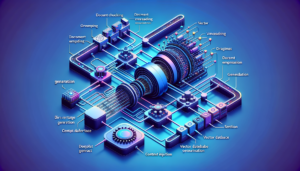
Retrieval Augmented Generation (RAG) has moved from research papers to production systems across every industry. In 2026, RAG is the standard approach for building AI applications that need access to private, up-to-date, or domain-specific knowledge. This guide covers production-ready architecture patterns, common pitfalls, and best practices learned from real-world deployments.
Why RAG Over Fine-Tuning?
Before diving into architecture, it’s important to understand when RAG beats fine-tuning:
- Freshness: RAG can access documents updated minutes ago; fine-tuning requires retraining
- Cost: RAG requires no GPU training; fine-tuning can cost thousands per run
- Hallucination Control: RAG grounds responses in retrieved documents with citations
- Data Privacy: Documents stay in your infrastructure; no need to send data to training pipelines
Fine-tuning is better when you need to change the model’s style, tone, or teach it a fundamentally new capability. For knowledge augmentation, RAG wins.
Production RAG Architecture
The Basic Pipeline
Documents → Chunking → Embedding → Vector Store
                                          ↓
User Query → Query Embedding → Similarity Search → Retrieved Chunks
                                                          ↓
                                            LLM (Query + Context) → Response
Pattern 1: Naive RAG
The simplest implementation: chunk documents, embed them, retrieve top-K similar chunks, and pass them to the LLM.
When to use: Prototyping, simple Q&A over small document sets.
Limitations: Poor retrieval quality on complex queries, no query understanding, chunks may lack context.
Pattern 2: Advanced RAG with Query Processing
Adds query transformation before retrieval:
- Query Rewriting: LLM reformulates the user query for better retrieval
- Query Decomposition: Complex questions split into sub-queries
- HyDE (Hypothetical Document Embeddings): Generate a hypothetical answer, embed it, and use that for retrieval
# Query decomposition example
original_query = "Compare the performance of PostgreSQL and MySQL for OLTP workloads"

sub_queries = [
    "PostgreSQL OLTP performance benchmarks 2026",
    "MySQL OLTP performance benchmarks 2026",
    "PostgreSQL vs MySQL transaction throughput",
]
# Retrieve for each sub-query, then combine contexts
Pattern 3: Agentic RAG
The most powerful pattern — an AI agent decides what to retrieve, when, and how:
- Agent analyzes the query and plans retrieval strategy
- Retrieves from multiple sources (vector DB, SQL, APIs, web search)
- Evaluates retrieved content quality and re-retrieves if needed
- Synthesizes final answer with citations
This pattern handles complex, multi-hop questions that naive RAG fails on.
Chunking Strategies That Matter
Chunking is the most underestimated component in RAG. Get it wrong and no amount of model sophistication will save you.
Semantic Chunking
Instead of splitting by fixed token count, split at semantic boundaries — paragraph breaks, section headers, topic changes. Libraries like LangChain and LlamaIndex offer semantic chunking out of the box.
Parent-Child Chunking
Store small chunks for precise retrieval but retrieve the parent (larger) chunk for context. This gives you the best of both worlds — accurate matching with sufficient context for the LLM.
Optimal Chunk Size
There’s no universal answer, but based on production experience:
- Technical documentation: 512-1024 tokens with 100-token overlap
- Legal documents: Paragraph-level chunks preserving clause structure
- Code repositories: Function/class-level chunks with file metadata
- Chat logs: Conversation-turn level with session context
Vector Database Selection
- Pinecone: Managed service, excellent for production. Best if you don’t want to manage infrastructure
- Weaviate: Open source, supports hybrid search (vector + keyword). Great self-hosted option
- Qdrant: Open source, Rust-based, fastest pure vector search. Excellent for high-throughput applications
- pgvector: PostgreSQL extension. Best if you already use PostgreSQL and want to minimize infrastructure
- ChromaDB: Lightweight, Python-native. Best for prototyping and small datasets
Common Production Pitfalls
1. Retrieval Quality Issues
Problem: The right documents exist but aren’t retrieved.
Solution: Implement hybrid search (combine vector similarity with BM25 keyword matching). Use reranking models like Cohere Rerank or cross-encoder models to re-score retrieved results.
2. Lost in the Middle
Problem: LLMs tend to focus on the beginning and end of context, ignoring middle chunks.
Solution: Limit to 5-7 chunks maximum. Place the most relevant chunk first. Consider summarizing retrieved chunks before passing to the LLM.
3. Stale Embeddings
Problem: Documents are updated but embeddings aren’t re-generated.
Solution: Implement incremental indexing with change detection. Track document hashes and re-embed only changed documents.
Evaluation Framework
You can’t improve what you don’t measure. Key metrics for RAG systems:
- Retrieval Precision@K: Are the retrieved documents relevant?
- Answer Faithfulness: Is the answer grounded in retrieved documents?
- Answer Relevancy: Does the answer address the user’s question?
- Latency: P95 end-to-end response time (target: under 3 seconds)
Use frameworks like RAGAS or custom evaluation pipelines with LLM-as-judge for automated quality scoring.
Conclusion
RAG in 2026 is a mature, well-understood pattern with clear best practices. Start with naive RAG for your prototype, iterate on chunking and retrieval quality, add query processing as needed, and graduate to agentic RAG for complex use cases. The key to success is treating retrieval quality as seriously as model quality — because in RAG, retrieval IS the bottleneck.
